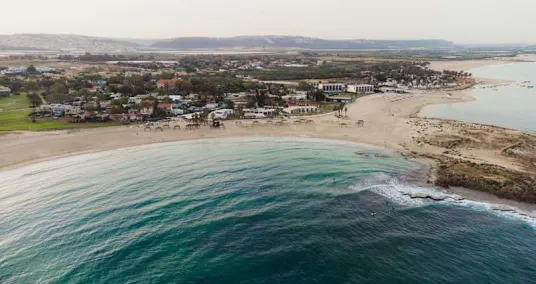
The discovery was made in an ancient shipwreck in the Dor Lagoon near the Carmel Coast, where archaeologists recovered nine pieces of unprocessed iron known as “blooms.”
Researchers from the University of Haifa said Wednesday that an underwater excavation off Israel’s northern Mediterranean coast uncovered what they described as the earliest known cargo of raw iron transported by ship, dating back around 2,600 years, Xinhua reported.
The discovery was made in an ancient shipwreck in the Dor Lagoon near the Carmel Coast, where archaeologists recovered nine pieces of unprocessed iron known as “blooms.” According to the university, the find provides direct evidence of how iron was transported in its earliest commercial stages.
The material was preserved in its original form, having solidified directly in a smelting furnace without undergoing forging or further refinement. Researchers said this distinguishes the cargo from later iron artifacts that typically show signs of shaping or tool-making.
Unlike copper and bronze, which could be melted into liquid form in ancient production processes, iron was heated with charcoal to produce a solid, porous mass. That mass was generally hammered to remove impurities and create denser material suitable for tools and implements.
The recovered blooms showed no indication of that secondary processing stage, suggesting they were transported immediately after production.

Earliest iron shipment discovered in ancient Mediterranean wreck
To determine the age and condition of the cargo, researchers conducted microscopic and chemical analyses.
Radiocarbon dating was also carried out on charred wood embedded in one of the pieces, helping confirm the timeline of the shipment. The findings were published in the journal Heritage Science.
Researchers said the cargo indicates that iron was being moved in raw form from production sites to other locations for further processing, pointing to a level of specialization in ancient manufacturing and trade networks in the Mediterranean.
The University of Haifa said the discovery provides new insight into early iron production and distribution practices in the region.
LATEST POSTS
- 1
 Spanish bishops and government sign deal for compensation of church sexual abuse victims
 - 2Haunting Giant Squid Surfaces in Japan and Devours Its Prey (Video)
- 3Olivia Rodrigo announces 3rd album, 'You Seem Pretty Sad for a Girl So in Love,' set to debut in June
- 4Research institutions tout the value of scholarship that crosses disciplines – but academia pushes interdisciplinary researchers out
- 5What to watch for in weight loss drugs in 2026




- IDF: Staying in West Bank refugee camps will quell lone-wolf terror
- Selena Quintanilla documentary 'Selena y Los Dinos: A Family's Legacy' is coming to Netflix
- A Past filled with Old Civilizations: The World's Most established Societies
- Passover under fire: Israelis balance fatigue with cautious hope after month of war
- Fundamental Home Machines: An Easy to understand Determination Guide
- German diesel hits new records over Easter weekend
- Nestlé recalls infant formula in 49 countries. See list.
- The next frontier in space is closer than you think – welcome to the world of very low Earth orbit satellites
- This star-forming galaxy is blowing out powerful winds topping 2 million mph