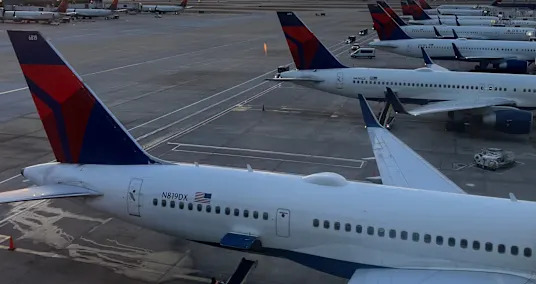
Airline passengers traveling without a Real ID or verified passport will have to pay a $45 fee starting on Feb. 1, the Transportation Security Administration announced on Monday.
“Identity verification is essential to traveler safety, because it keeps terrorists, criminals, and illegal aliens out of the skies and other domestic transportation systems such as rail,” Adam Stahl, a senior TSA official, said in a statement announcing the policy.
The new rules mark the next step in the TSA’s effort to encourage travelers to meet its higher standards for identity verification, which went into effect earlier this year after nearly two decades of delays.
Late last month, the TSA published a proposed rule that would require anyone using an alternative ID to pay $18 in order to cover the “government-incurred costs” of enhanced screening that’s needed in those cases.
“The current alternative identity verification process is time and resource intensive, limiting the number of individuals for whom TSA can provide the service,” the agency wrote in a notice to the Federal Register last month.
Officials reportedly decided to raise the price to $45 because the expected costs of the additional screenings turned out to be higher than originally anticipated. Anyone traveling without an accepted ID — which also includes a valid passport, tribal ID and certain other government-issued identification — will also need to register through an online portal called TSA Confirm.ID.
Congress passed the Real ID Act in 2005 to create new federal standards for state-issued driver’s licenses and other ID in response to the Sept. 11 attacks four years earlier. The law initially called for the new rules to be enforced in 2008, but that deadline was pushed back repeatedly. Real ID requirements finally went into effect in May, almost exactly 20 years after the law was passed.
Currently, there is no punishment for those traveling without a Real ID, other than the potential delays they might face to allow time for extra security screening.
The new policy will only affect a small minority of air travelers, according to the TSA. Currently, 94% of passengers already use a Real ID or other acceptable form of identification, the agency said.
“We must ensure everyone who flies is who they say they are,” Stahl said. “This fee ensures the cost to cover verification of an insufficient ID will come from the traveler, not the taxpayer.”
All U.S. states and territories currently issue Real-ID-compliant driver’s licenses, but IDs that are more than a few years old may not meet the new federal standards. The TSA encourages anyone who’s not sure whether their license is acceptable under the updated rules to contact their state’s Department of Motor Vehicles.
LATEST POSTS
- 1
 SF Chinatown's historic Empress of China building being revived into cultural campus
 - 2Between 600 to 800 aid trucks entering Gaza daily since start of ceasefire, COGAT confirms
- 3FDA adds strongest warning to Sarepta gene therapy linked to 2 patient deaths
- 4Why is the Artemis 2 rocket launch different from all other rocket launches?
- 5A Manual for SUVs with Less Noteworthy Gas Mileage




- Coffee Prices Finish Higher on Brazil Cop Concerns
- Exemplary Fragrances: A Manual for Notorious Scents
- Displaced Palestinian families suffer as heavy rains flood Gaza tent camps
- Historical mysteries solved by science in 2025
- Horror and fear in West Bank as Israel approves hanging Palestinians convicted of murdering Israelis
- Vote In favor of Your Favored Cereal
- FACT FOCUS: Trump sows confusion on number of childhood vaccinations
- Delta flight bound for Atlanta makes emergency landing after engine issue
- Jamaica reports deadly leptospirosis outbreak after Hurricane Melissa